


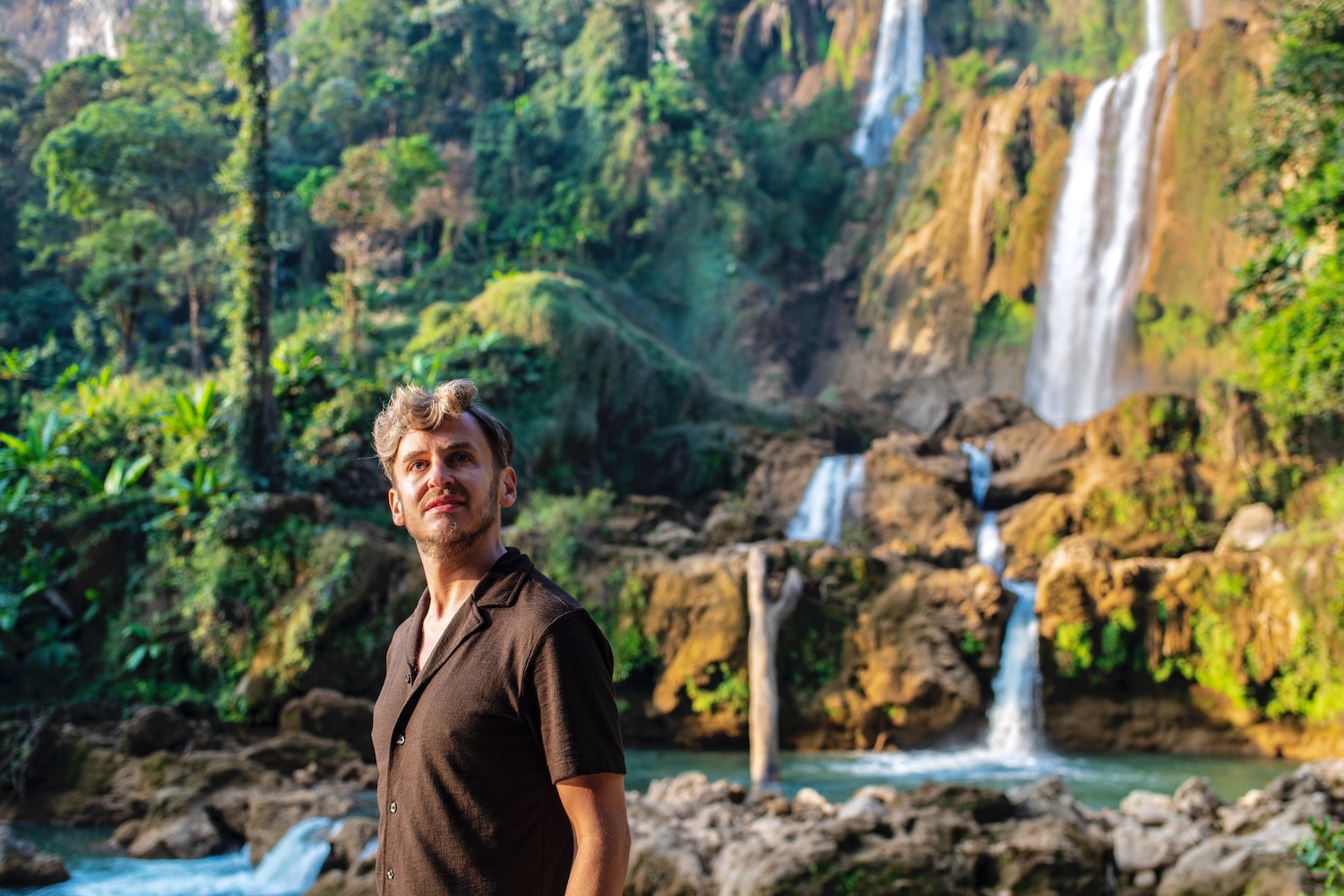
I first hatched the idea of visiting Thi Lor Su waterfall almost two years before I actually did. It was early 2024, and in my naïveté, I’d convinced myself that I would only need a couple of days in Tak province, and that I would be able to get there from Mae Hong Son in a matter of hours.
It didn’t take much research for me to see the error of my ways. I quickly discovered not only how much further from the rest of northern Thailand Tak was than its as-the-crow-flies distance, but that its most famous destination (the aforementioned waterfall) was even more remote, and would necessitate even more time.
The good news? If you’re reading this, it means I finally made my trip—and lived to tell about it! The bad news? Although my excursion to Thi Lor Su was a one-of-a-kind adventure, I’m not sure if it was worth the expense or the hype (though I do say this with a caveat, which you’ll learn more about if you continue reading).
Why It Took Me Years to Visit Thi Lor Su
Originally, I was going to visit Tak province (albeit not Thi Lor Su) all the way back in 2017, when I was living in Bangkok. As I tended to do at that time, I planned to fly to a city (Mae Sot, in this case) a figure things out once I got there. If I’m honest, I can’t remember why I ended up nixing this trip, though I do imagine it had to do with Mae Sot’s checkered reputation (which I will soon write about in another post…stay tuned!).
Knowing this, as well as the fact that it took two years for me to visit Thi Lor Su once I finally added it to my list, you can probably imagine why I felt a certain sense of anxiety as the tour vehicle picked me up at Mae Sot Airport for the four-drive drive to Umphang. And not just because of all the dried mud along the roads, which my mother-in-law warned could complicate my journey, although that certainly didn’t help.
How My Thi Lor Su Trip Went Down
Late arrival, early departure
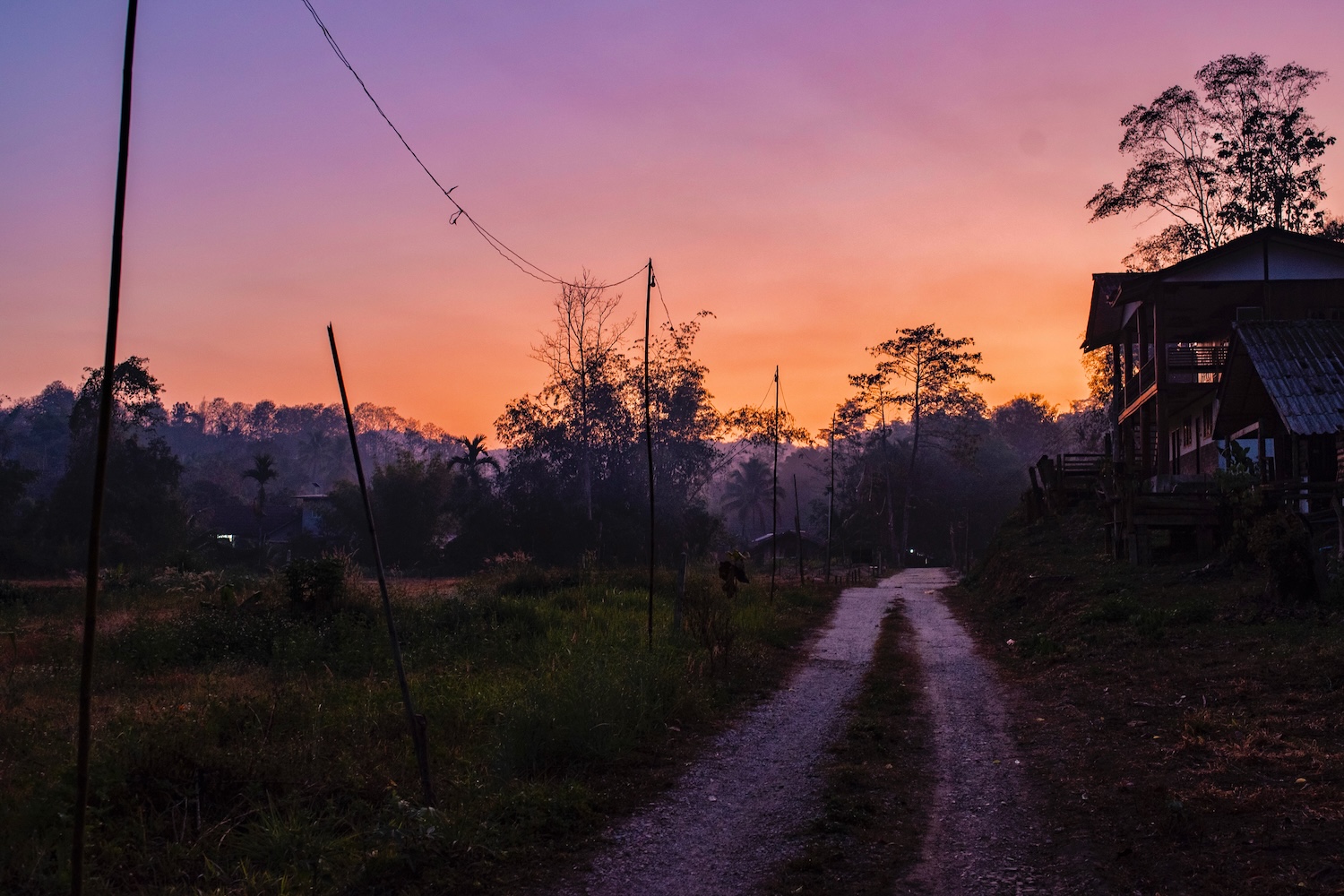
It was well past my bedtime when we arrived at the spartan guest house owned by Umphang Adventures, the company that organized my tour. Conversely, what they described as an early start (breakfast at 7, and setting off at 8:30) was actually a very humane hour for me, which allowed me to explore the town a little. There wasn’t much to explore, of course; Umphang is only a town compared to the rest of what exists around it.
A rainbow-hued amuse-bouche
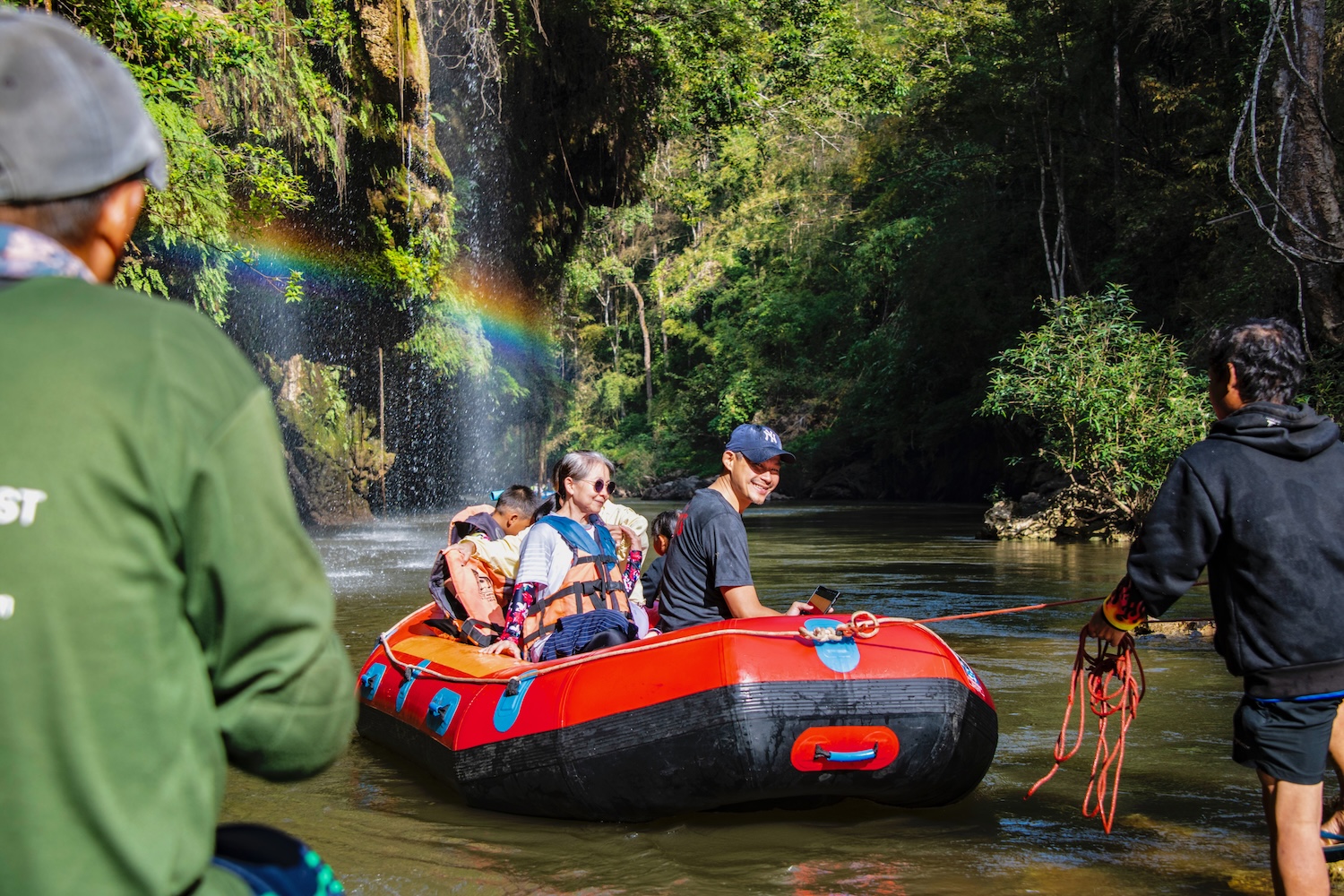
Rather than heading to Thi Lor Su right at 8:30, we did a short rafting trip (we being myself, the man who would be my guide and a boatman I would never end up seeing again) along the Mae Khlong River. This was nice but mostly forgettable; the highlights were the aptly-named Rainbow Falls, and a large bamboo forest that hid a natural hot spring. “It means they’ll die soon,” my guided point out as he drew my attention to the fact that many of the bamboo trees were blossoming.
Camping at the doorstep
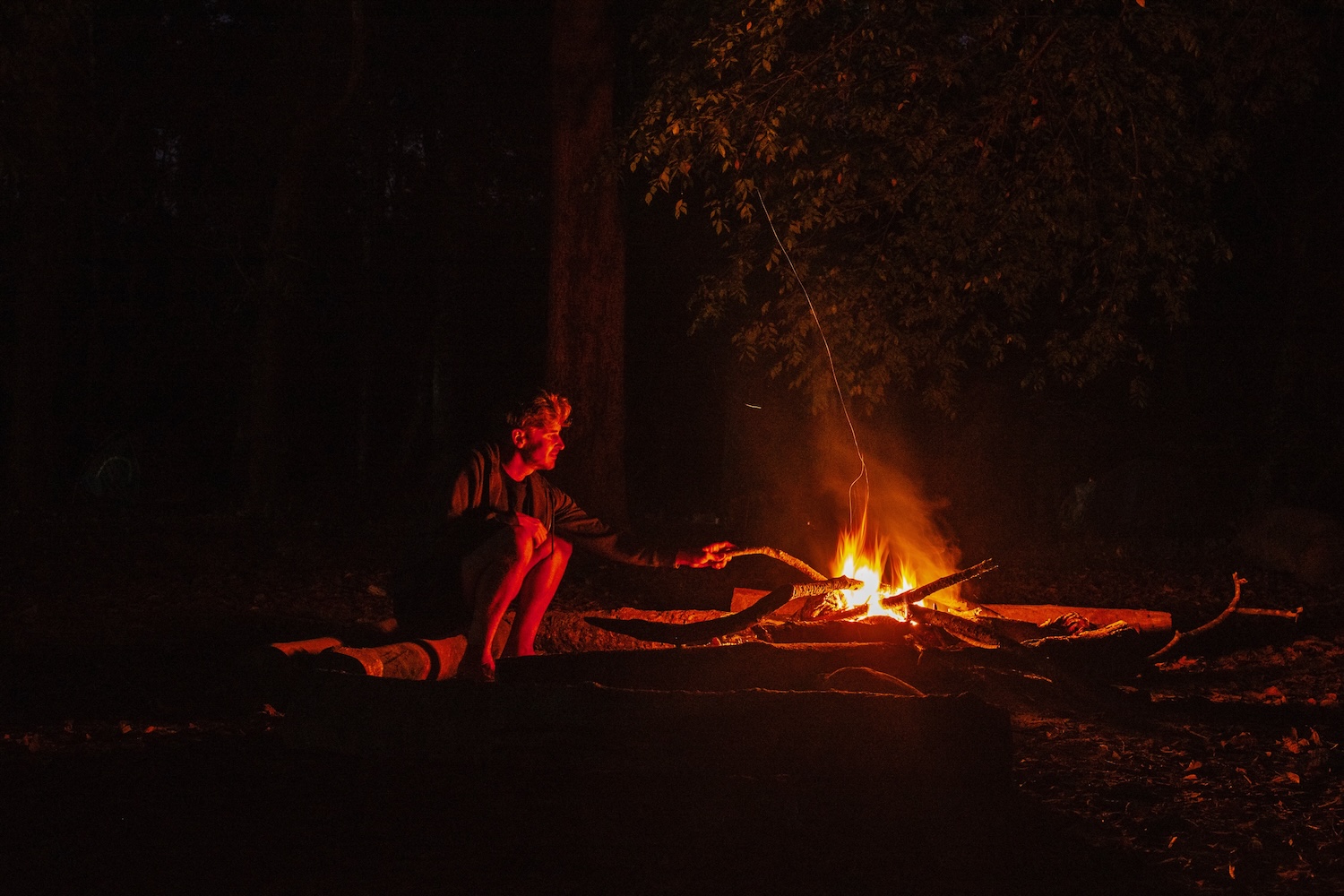
Following our rafting trip and a simple lunch, we arrived at the Thi Lor Su campsite, and headed straight to the falls. This was a mistake—the lighting was far too harsh to photograph them. We made our way back to camp quickly; the guide set up my tent and made my future campfire and, as the sun began to sink in the sky, I made my way back to the waterfall, which was much more flattered by the softer light. I also returned the next morning, which saw the namtok at its most beautiful.
Karen village conundrum
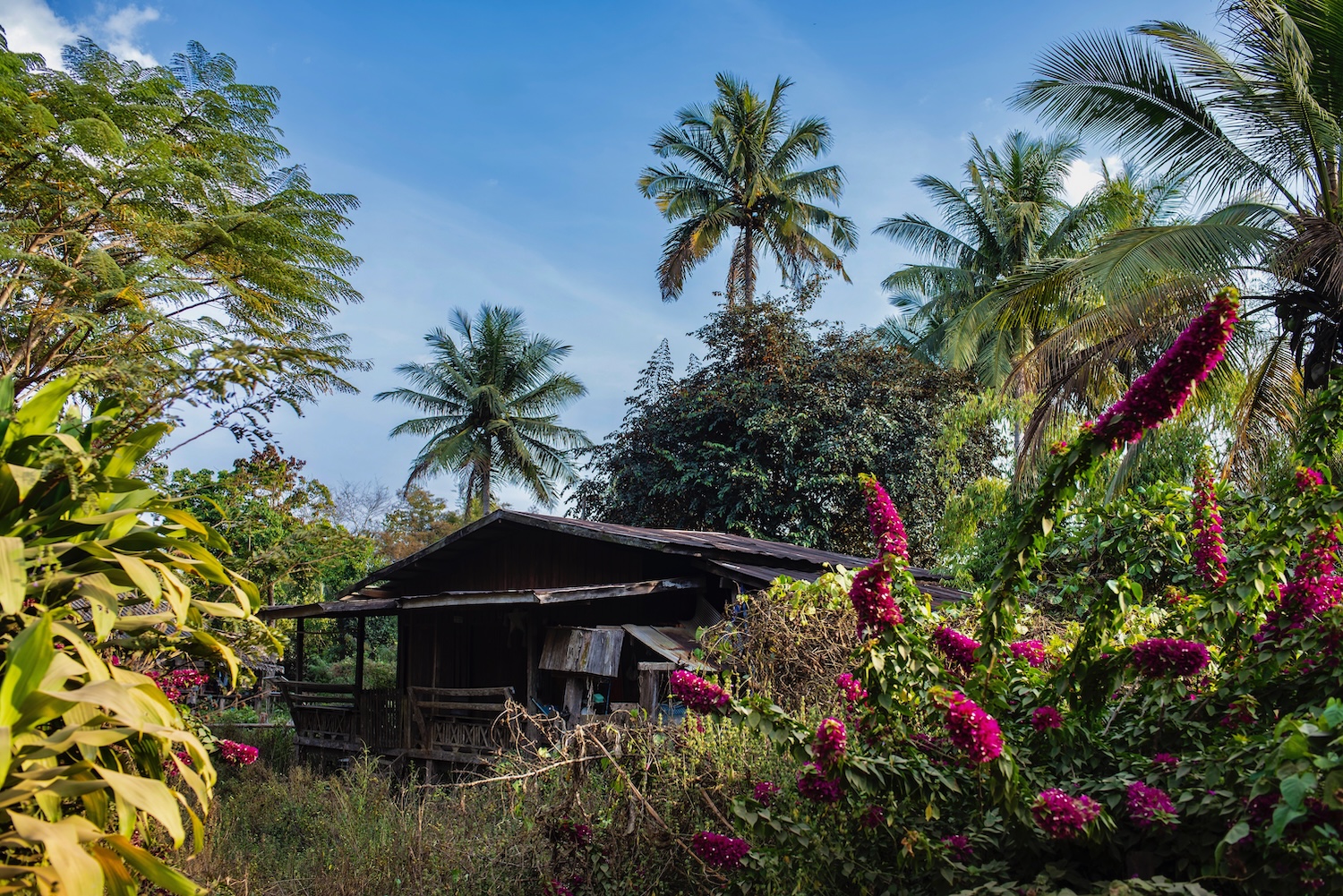
The next day—or, the same day, relative to the morning I went to the waterfall—was the most challenging, and saw us hike over 10 miles to a Karen village that made Umphang seem like Bangkok by comparison. It had no electricity or cell service, and no paved roads going through it or leading to it. It was honestly miserable to endure the evening there, as kind of my host (who called himself “Cha Tea”) was, and as much as I respect the local people and their dignity.
The issue of timing
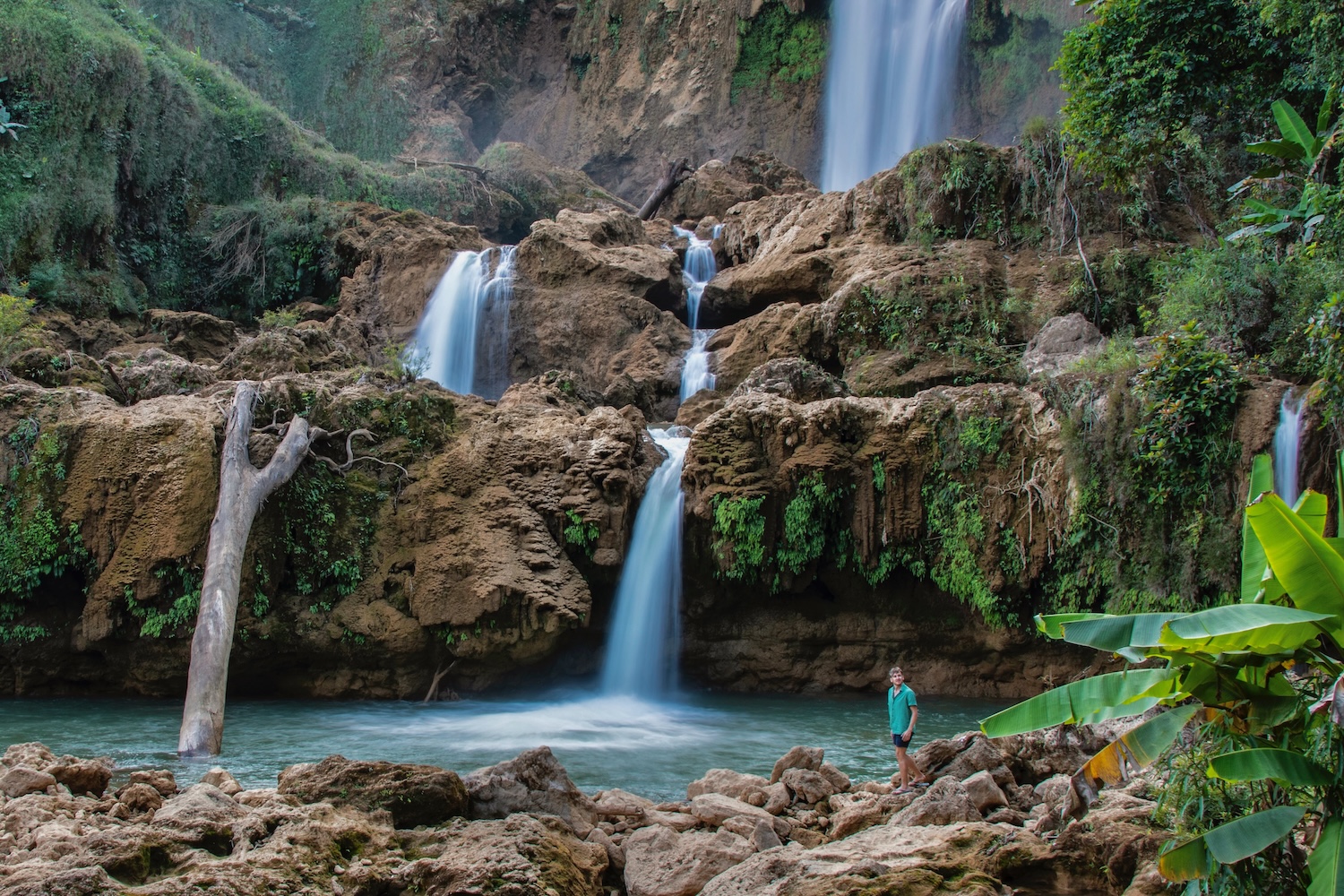
The next day—the final day—we ended up trekking almost as much as we had the first; I wanted to kiss the ground by the time the pick-up truck met us hours after we set off. I was deeply thankful for the unforgettable experience, and excited to process my pictures. But I was also slightly wistful: Had I visited during the wrong season? The waterfall was still impressive, mind you, but we were months past the end of the rainy season, as the dust in the air confirmed. Would it have been a more worthwhile experience in November or December than it had been in late January?
Do You Actually Need a Tour to Visit Thi Lor Su?
As I mentioned a few paragraphs up, the roads leading from Mae Sot to Umphang, and from there to Thi Lor Su and destinations near it, are bad. They’re covered in mud during the rainy season, and this dries into a thick, caked dirt during the dry season, making it difficult to self-drive, especially if you’re in a rental car that you don’t want to damage. With this being said, I saw plenty of local Thai people who were traveling independently.
Indeed, the utility of a Thi Lor Su tour is first and foremost communication. If you don’t speak Thai, getting around in this part of Thailand (figuratively—not talking about the roads, in this case) could be difficult, even impossible. Likewise, while it’s easy enough to drive to the Thi Lor Su camp and make the relatively short walk to the falls themselves, visiting some of the other destinations in the area can be cumbersome or even impossible if you’re on your own.
Other FAQ About Thi Lor Su Waterfall
Where is the Thi Lor Su waterfall?
The Thi Lor Su waterfall is in Tak province in northwestern Thailand. Specifically, it’s about four hours from Mae Sot Airport, near the town of Umphang. Because of its distance and the poor quality of roads in the area, visiting the waterfall requires (at minimum) one overnight stay.
How do I get to Thi Lor Su waterfall from Bangkok?
Getting to Thi Lor Su from Bangkok isn’t difficult, though it is tedious. After flying from Bangkok to Mae Sot, you’ll need to make the four-hour drive to the town of Umphang. Depending upon what time you arrive, you may need to stay here; in some cases, you can continue the same day to the Thi Lor Su campground and walk from there to the waterfall before nightfall.
How difficult is the hike to Thi Lor Su?
The “hike” to Thi Lor Su is really more of a walk. The entire path from the campground is paved, and while there are a couple of dozen stairs, it is very easy. Based on my own experience and the sorts of people I observed making the 20-30 minute journey, only someone in remarkably bad shape or health would have trouble reaching the waterfall.
The Bottom Line
Thi Lor Su waterfall is an unforgettable destination—and not just because visiting it is such an ordeal. The waterfall itself is magnificent, and even if you visit slightly “out of season” like I did, strikes you with its size and splendor the moment you arrive there. On the other hand, the entire experience is unnecessarily complicated. This is not a dig at Umphang Adventures, whose staff make navigating all of it so much easier, but rather a damning commentary on infrastructural development in rural Thailand. I may go back at some point in the future, but I’m in no rush to do so. Need help deciding whether Thi Lor Su is right for you? Consider hiring me to plan your trip!